
- 品牌
- Proscript
- 型号
- EA
Recombinant Biotinylated Human HLA-A*02:01&B2M&MAGE-A4 or MAGE-A8 (KVLEHVVRV) Monomer Protein,His-Avi Tag性能参数分子别名(Synonyms)MAGE-A4orMAGE-A8;MAGE-A4;MAGE-A8;表达区间及表达系统(Source)BiotinylatedHumanHLA-A*02:01&B2M&MAGE-A4orMAGE-A8(KVLEHVVRV)MonomerProteinisexpressedfromHEK293withHistagandAvitagattheC-Terminus.ItcontainsGly25-Thr305(HLA-A*02:01),Ile21-Met119(B2M)andKVLEHVVRVpeptide.[Accession|A0A140T913(HLA-A*02:01)&P61769(B2M)&KVLEHVVRV]分子量大小(MolecularWeight)TheproteinhasapredictedMWof50.50kDa.Duetoglycosylation,theproteinmigratesto52-62kDabasedonSDS-PAGEresult.(Endotoxin)Lessthan1EUperμgbytheLALmethod.纯度(Purity)>95%asdeterminedbySDS-PAGEandHPLC.制剂(Formulation)Suppliedas0.22μmfilteredsolutioninPBS(pH7.4).储存条件Theproductshouldbestoredat-85~-65℃for1yearfromdateofreceipt.RANTES还具有抑制某些HIV-1,HIV-2和Simian免疫缺陷病毒(SIV)的菌株的能力。Recombinant Human VIPR2 Protein,mFc Tag
Trop-2,alsoknownasepithelialglycoprotein-1antigen(EGP-1),isaproteinthatinhumansisencodedbytheTACSTD2gene.Mutationsofthisgeneresultingelatinousdrop-likecornealdystrophy,anautosomalrecessivedisordercharacterizedbyseverecornealamyloidosisleadingtoblindness.产品性质别名EGP1;EGP-1;TROP2;GA733-1;gp50;T16;TACSTD2;TROP-2;M1S1;TACD2UniprotNo.P09758表达区间及表达系统RecombinantBiotinylatedHumanTROP-2/TACSTD2ProteinisexpressedfromHEK293cellswithHistagandAvitagattheC-terminal.ItcontainsHis27-Thr274.分子量TheproteinhasapredictedMWof30.5kDa.Duetoglycosylation,theproteinmigratesto46-55kDabasedonTris-BisPAGEresult.纯度>95%asdeterminedbySDS-PAGEandHPLC活性ELISAData:ImmobilizedAnti-TROP-2Antibody,hFcTagat0.5μg/mL(100μL/well)ontheplate.DoseresponsecurveforBiotinylatedHumanTROP-2,HisTagwiththeEC50of24.1ng/mLdeterminedbyELISA.0EUper1μgoftheproteinbytheLALmethod.制剂Lyophilizedfrom0.22μmfilteredsolutioninPBS(pH7.4).Normally5%trehaloseisaddedasprotectantbeforelyophilization.Recombinant Rat IL-13Ra2 Protein,His TagUbcH5a/UBE2D1具有一个保守的E2催化结构域,该结构域含有一个活性位点半胱氨酸残基。
SARS-CoV-2, which causes the global pandemic coronavirus disease 2019 (Covid-19), belongs to a family of viruses known as coronaviruses that also include MERS‑CoV and SARS-CoV-1. Coronaviruses are commonly comprised of four structural proteins: Spike protein (S), Envelope protein (E), Membrane protein (M) and Nucleocapsid protein (N). The SARS-CoV-2 S protein is a glycoprotein that mediates membrane fusion and viral entry. The S protein is homotrimeric, with each ~180-kDa monomer consisting of two subunits, S1 and S2 .The RBD of SARS-CoV-2 binds a metallopeptidase, angiotensin-converting enzyme 2 (ACE-2). Before binding to the ACE-2 receptor, structural analysis of the S1 trimer shows that only one of the three RBD domains is in the "up" conformation. This is an unstable and transient state that passes between trimeric subunits but is nevertheless an exposed state to be targeted for neutralizing antibody therapy. Polyclonal antibodies to the RBD of the SARS-CoV-2 protein have been shown to inhibit interaction with the ACE-2 receptor, confirming RBD as an attractive target for vaccinations or antiviral therapy.
Angiotensin I Converting Enzyme (ACE-2), also called ACEH (ACE homologue), is a dimeric, zinc-dependent metalloprotease of the ACE family that also includes somatic and germinal ACE. ACE-2 mRNA is found at high levels in heart, testis, and kidney and at lower levels in a wide variety of tissues. ACE-2 is the SARS-CoV and SARS-CoV2 Spike protein receptor in vivo, functions catalytically as a carboxypeptidase to cleave several substrates including angiotensins I and II, and acts as a partner for B0AT1-family amino acid transporters. Through these functions, ACE-2 has been shown to be involved in several diseases including SARS, COVID19, acute lung injury, heart disease, liver and lung fibrosis, inflammatory lung disease, and cardiopulmonary disease . Full length ACE-2 protein includes an extracellular region composed of a single N-terminal peptidase domain and C-terminal collectrin-like domain (CLD), a transmembrane domain, and a short cytoplasmic tail. The N-terminal peptidase region is required for binding to SARS-CoV and SARS-CoV2 spike proteins, while the CLD contains a region that promotes dimerization and association with amino acid transporters.(FGF-21)是FGF基因家族的成员。 基于其结构,FGF-21与FGF-19和-23一起进一步分为FGF的亚家族。

Recombinant Biotinylated Human KIR2DL1 Protein,His-Avi Tag性能参数分子别名(Synonyms)CD158A;CD158Ankat1;cl-42表达区间及表达系统(Source)BiotinylatedHumanKIR2DL1ProteinisexpressedfromHEK293withHistagandAvitagattheC-Terminus.ItcontainsHis22-Arg242.[Accession|P43626]分子量大小(MolecularWeight)TheproteinhasapredictedMWof27.1kDa.Duetoglycosylation,theproteinmigratesto48-60kDabasedonSDS-PAGEresult.(Endotoxin)Lessthan1EUperμgbytheLALmethod.纯度(Purity)>95%asdeterminedbySDS-PAGEandHPLC.制剂(Formulation)Lyophilizedfrom0.22μmfilteredsolutioninPBS(pH7.4).Normally8%trehaloseisaddedasprotectantbeforelyophilization.重构方法(Reconstitution)Centrifugethetubebeforeopening.Reconstitutingtoaconcentrationmorethan100μg/mlisrecommended.Dissolvethelyophilizedproteinindistilledwater.AFGF在调节细胞存活,细胞分裂,血管生成,细胞分化和细胞迁移中起重要作用。Arg-Gly-Asp-Ser
凝血酶是由大小分别为31 KD和6 KD的两条肽链通过二硫键组成的一种丝氨酸蛋白水解酶。Recombinant Human VIPR2 Protein,mFc Tag
产品简介抑肽酶(Aprotinin),又称为抑蛋白酶肽,是一种竞争性、可逆的丝氨酸蛋白酶抑制剂,可与丝氨酸蛋白酶形成稳定复合物并阻断酶的活性位点,这种结合是可逆的,大多数的抑肽酶-蛋白酶复合物在极端的pH<3.0的条件下解除结合。抑肽酶抑制糜蛋白酶、胰蛋白酶、激肽释放酶和血纤维蛋白溶酶,不能抑制Xa因子和凝血酶。从结构上来说,抑肽酶是一种来自牛肺的单体球状蛋白,由58个氨基酸组成并排列在具有三个交联二硫键的单个多肽链中。重组抑肽酶采用大肠杆菌表达,在GMP法规下生产,不含任何动物源成分,无动物源性的病毒污染,氨基酸序列与来源于牛肺的抑肽酶完全一致,具有与动物源性抑肽酶相同的酶学性质,可替代动物源性抑肽酶用于各种生物技术过程中,如:重组蛋白生产中抑制丝氨酸蛋白酶的活性;细胞培养等。另外,也提供来源于牛肺的抑肽酶(动物源性)酶活单位:能抑制1个胰蛋白酶单位的活力称为1个抑肽酶活力单位(EPU)。储存条件冻干粉2~8℃保存,有效期2年。使用方法抑肽酶与蛋白酶是等摩尔有效结合,推荐的结合pH>6.0,在pH<3.0的条件下不结合。可直接使用0.9%NaCl溶解,溶解后可-20℃储存。Recombinant Human VIPR2 Protein,mFc Tag


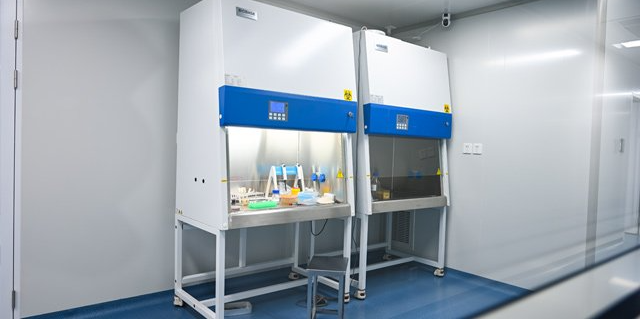
甲醇代谢通路是毕赤酵母更标志性的生理特征,也是其实现外源蛋白可控表达的关键机制,只在甲醇诱导条件下特异性启动。自然状态下,毕赤酵母优先利用葡萄糖、甘油等常规碳源,此时甲醇代谢相关基因完全沉默,避免能量浪费。当培养基中只留存甲醇作为碳源时,菌株会快速启动关键代谢基因,开启甲醇分解代谢过程。其代谢关键流程为:甲醇在醇氧化酶作用下生成甲醛,再经脱氢酶催化生成甲酸,更终分解为二氧化碳与水,同时为菌体生长与蛋白合成提供能量。该通路中的AOX1、AOX2启动子具备极强的甲醇诱导特异性,且表达调控严谨,无甲醇时几乎无本底表达,添加甲醇后可快速启动下游基因高效转录。科研人员利用这一特性,将外源目的基因与AOX...
- Recombinant Human CTGF/CCN2 Protein 2026-06-30
- Ultra-Long DNA Polymerase 2026-06-30
- Recombinant Human CD40/TNFRSF5 Protein 2026-06-30
- Recombinant Human/Murine/Rat Activin A Protein 2026-06-30
- Dermorphin Analog 2026-06-29
- Recombinant PE-Labeled Human CD7 Protein 2026-06-28
- Recombinant Mouse PSCA Protein 2026-06-28
- Recombinant Human HPN Protein 2026-06-27
- Recombinant Human IgE Protein 2026-06-27
- Recombinant Mouse WISP1 Protein 2026-06-27
- Recombinant Rat PAI-1 Protein 2026-06-25
- 超快速T4 DNA连接酶 2026-06-25
- Recombinant Rhesus TARC/CCL17 2026-06-25
- Recombinant Mouse PODXL2 Protein 2026-06-24
- Recombinant Human GDF-6/BMP-13 2026-06-24
- Recombinant Human Sigle2/CD22(His Tag) 2026-06-24



- Recombinant Human/Murine/Rat Activin A Protein 06-30
- 辽宁大肠杆菌表达技术服务 06-29
- 上海人胶原蛋白开发技术服务 06-29
- Dermorphin Analog 06-29
- 上海纯化工艺服务技术服务技术服务 06-29
- 天津酵母表达高通量筛选技术服务技术服务 06-29
- 辽宁毕赤酵母表达VLP技术服务技术服务 06-29
- 汉逊酵母表达HPV VLP 06-28
- Recombinant PE-Labeled Human CD7 Protein 06-28
- 上海微生物基因编辑技术服务技术服务 06-28